
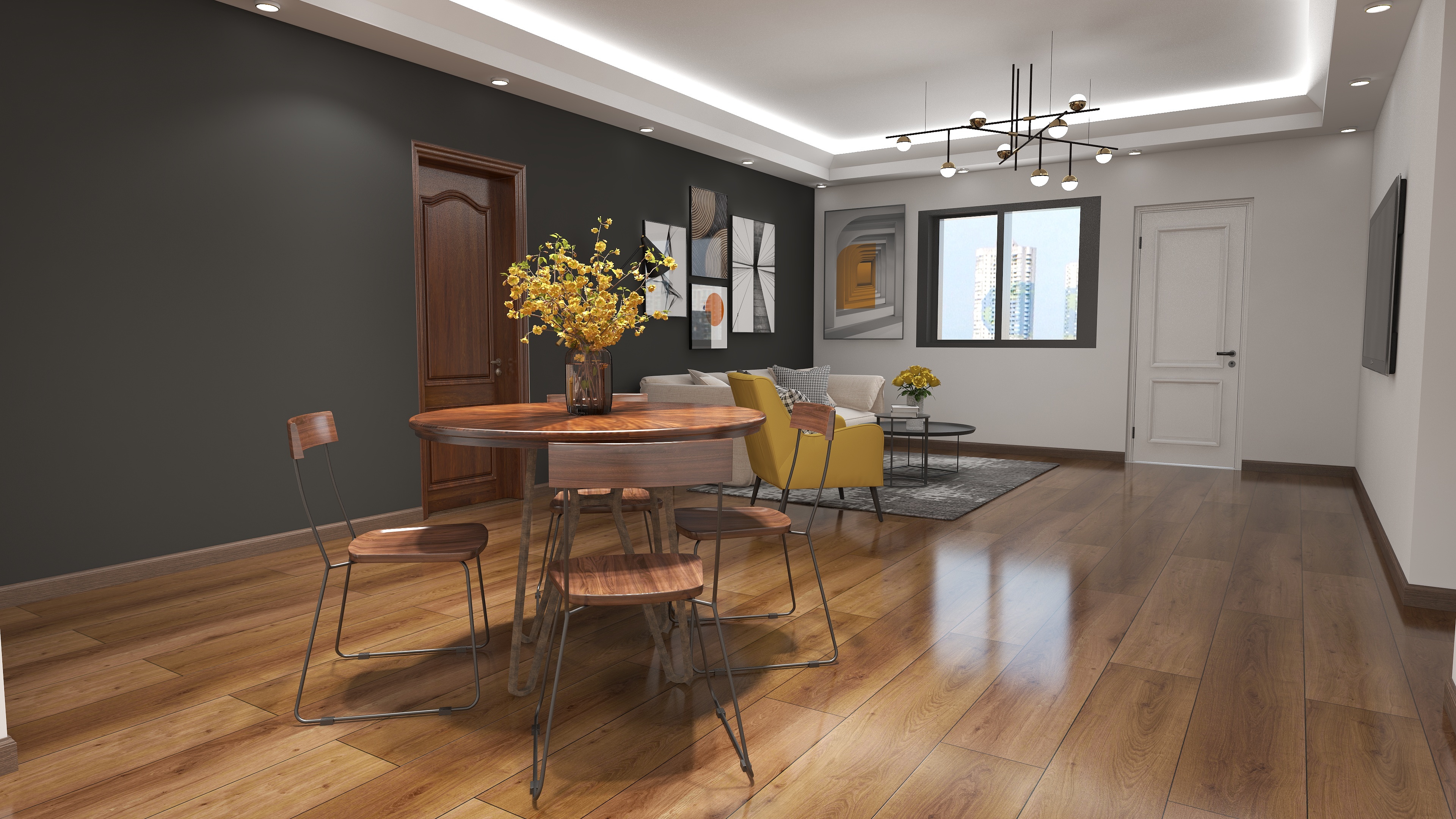
There's a reason every high-end residential project you've admired in the last decade has wide-plank floors. It's not a trend — it's a return to a standard that was only abandoned because of manufacturing constraints that no longer exist.
Here's why wide-plank floors look better, and how to choose the right width for your space.
A brief history
For most of flooring history, wide planks were the default. Old-growth forests produced timber with few knots and wide grain, and sawyers simply cut it as wide as the log allowed — often 12 to 18 inches. Narrow strip floors (2¼ inches was the postwar standard) only became dominant in the 1950s and '60s when mass production, shorter-rotation timber, and the economics of waste reduction pushed manufacturers toward narrower cuts.
The irony: narrow strip floors became associated with "quality" simply because that's what was available at scale. Wide planks became associated with older homes and reclaimed wood — a niche, not a standard.
Why wider looks better
Fewer seams. Every seam in a floor is visual noise — a line that interrupts the wood's natural flow. Wide planks have dramatically fewer of them. A room floored in 7-inch planks has roughly a third as many seams as the same room done in 2¼-inch strips. The result reads as calmer, more open, and more luxurious.
The grain shows more. Wood grain is the material's most beautiful characteristic. Narrow boards only show a narrow slice of each plank's growth rings and figuring. Wide boards show the full story — cathedral grain patterns, medullary rays, the natural character that makes wood worth using in the first place.
Rooms feel larger. This counterintuitive effect is well-documented in interior design. Wide planks, especially laid lengthwise in the room's longest dimension, elongate the space visually. The eye follows the plank, not the seam.
More contemporary. Interior design has moved decisively away from the fussy, detail-heavy aesthetic of the strip-floor era. Wide planks read as modern without trying — their simplicity is the point.
How to choose your width
5–6 inches: The entry point for wide planks, and still far better than traditional strip. Good for smaller rooms or more traditional interiors where very wide planks might feel out of scale.
7–8 inches: The sweet spot for most residential applications. Wide enough to show real character, narrow enough to work in any room size. This is where Portofino's most popular series — Foundation, Villetta, Vita — live.
9–10 inches and above: Statement floors for large, open spaces. The Savona Collection at 9-5/8 inches is among the widest engineered hardwood available in this category. These work beautifully in great rooms, kitchen-living combinations, and commercial spaces. In smaller rooms, they can feel overwhelming.
A note on stability
Wider planks were historically more prone to movement — cupping, gapping, and warping with seasonal humidity changes. This is why solid hardwood still maxes out around 5 inches for most residential applications.
Engineered construction solves this completely. Multi-layer cross-ply construction locks the plank dimensionally stable regardless of width. This is why engineered hardwood dominates the wide-plank category: you get the full visual benefit of a wide plank without the movement risk of solid wood.
What to look for
When evaluating wide-plank options:
- Core construction: More plies means more stability. Look for 5+ layer engineered construction.
- Top layer thickness: A thicker veneer means more character in the grain and, for real hardwood, the possibility of light refinishing later. 2mm and above is meaningful.
- Finish: Wire-brush or hand-scraped finishes are more forgiving on wide planks — they hide the minor movement and wear that any floor accumulates over time. High-gloss finishes amplify every imperfection.
The floor is the largest single surface in any room. It deserves the same attention you'd give to any other major design decision. Don't default to narrow because it's what you know — consider what would actually look best.