
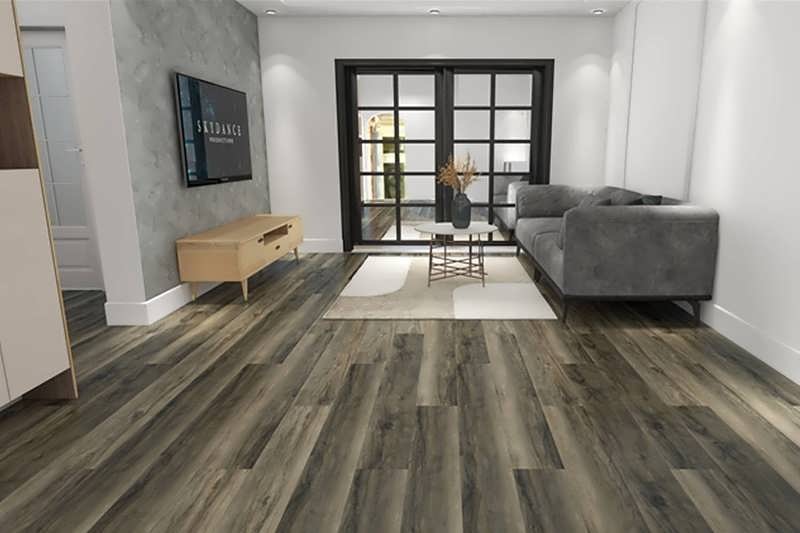
Choosing a floor is one of the most impactful decisions you'll make in a renovation. It's also one of the most permanent — most floors are expected to last 20 to 30 years, and some solid hardwood installations outlast the buildings they're in.
The good news: there's a right answer for almost every situation. The challenge is understanding what separates your options at a level beyond marketing copy.
Hardwood: the benchmark
Solid hardwood is still the reference point against which everything else is measured. There's a reason for that. The material is real wood through and through — each plank milled from a single piece of timber. It can be sanded and refinished multiple times over its life, which means a 20-year-old solid floor can look brand-new after a week's worth of work.
Best for: Living rooms, bedrooms, studies, dining rooms. Any space where warmth, authenticity, and longevity are the brief.
Avoid in: Bathrooms, basements, or any space with significant moisture exposure. Solid wood expands and contracts with humidity — it needs a stable environment to perform.
Engineered hardwood splits the difference. A quality veneer of real wood is bonded over a multi-layer plywood core, which significantly reduces movement. It can go over radiant heat, over concrete slabs, and in environments where solid wood would buckle.
Bamboo: the misunderstood one
Bamboo is technically a grass, not a wood — but strand-woven bamboo is harder than most hardwood species on the Janka scale. It's one of the most renewable materials in flooring: bamboo matures in five years versus 50–70 years for oak.
Best for: Eco-conscious homeowners who want genuine natural material and don't mind a slightly more linear grain pattern.
One note: Quality varies enormously in bamboo. Ours is sourced from the Dabieshan Mountains with no synthetic additives and CARB2 certification — that matters when you're breathing the off-gassing from a new floor.
Vinyl SPC: the performance choice
Stone Polymer Composite (SPC) has changed the flooring industry. A rigid core made from limestone, plastic, and polymer resin makes it genuinely waterproof (not moisture-resistant — waterproof), virtually indestructible under normal use, and stable across temperature swings.
Best for: Kitchens, bathrooms, basements, laundry rooms, mudrooms — anywhere you need performance over aesthetics. Also excellent for rental properties where durability matters more than the premium feel of real wood.
The caveat: The best SPC looks remarkably like wood. The worst looks like vinyl floor. The difference is almost entirely in the embossing and photographic layer — buy from a manufacturer who invests in those details.
Laminate: the honest workhorse
Laminate was unfairly maligned in the early 2000s when manufacturers prioritized price over quality. Modern laminate is a genuinely different product — high-density fiberboard cores, realistic photographic layers, and AC-rated wear surfaces that hold up to real traffic.
Best for: Budget-conscious renovations, investment properties, children's rooms, or anyone who wants the aesthetic of hardwood at roughly a third of the cost.
Not great for: Moisture. Laminate still uses a wood-fiber core, which means prolonged water exposure causes swelling. Keep it out of bathrooms and away from leaky appliances.
The quick reference
| Material | Waterproof | Refinishable | Price | Best Room | |----------|------------|--------------|-------|-----------| | Solid Hardwood | No | Yes (many times) | $$$ | Living, bedroom | | Engineered Hardwood | No | Yes (1–3 times) | $$ | Most rooms | | Bamboo | No | Limited | $$ | Living, bedroom | | Vinyl SPC | Yes | No | $$ | Kitchen, bath, basement | | Laminate | No | No | $ | Living, bedroom, office | | WPC | Yes | No | $$ | Kitchen, bath, basement |
Before you decide
Order samples. This sounds obvious, but most homeowners skip it and regret it. A floor sample in your actual space, under your actual lighting, next to your actual furniture — that's worth more than any specification sheet or showroom display.
Use our room visualizer to preview any Portofino collection in a photo of your actual room, then order physical samples before you commit. It costs almost nothing and eliminates most buyer's remorse.